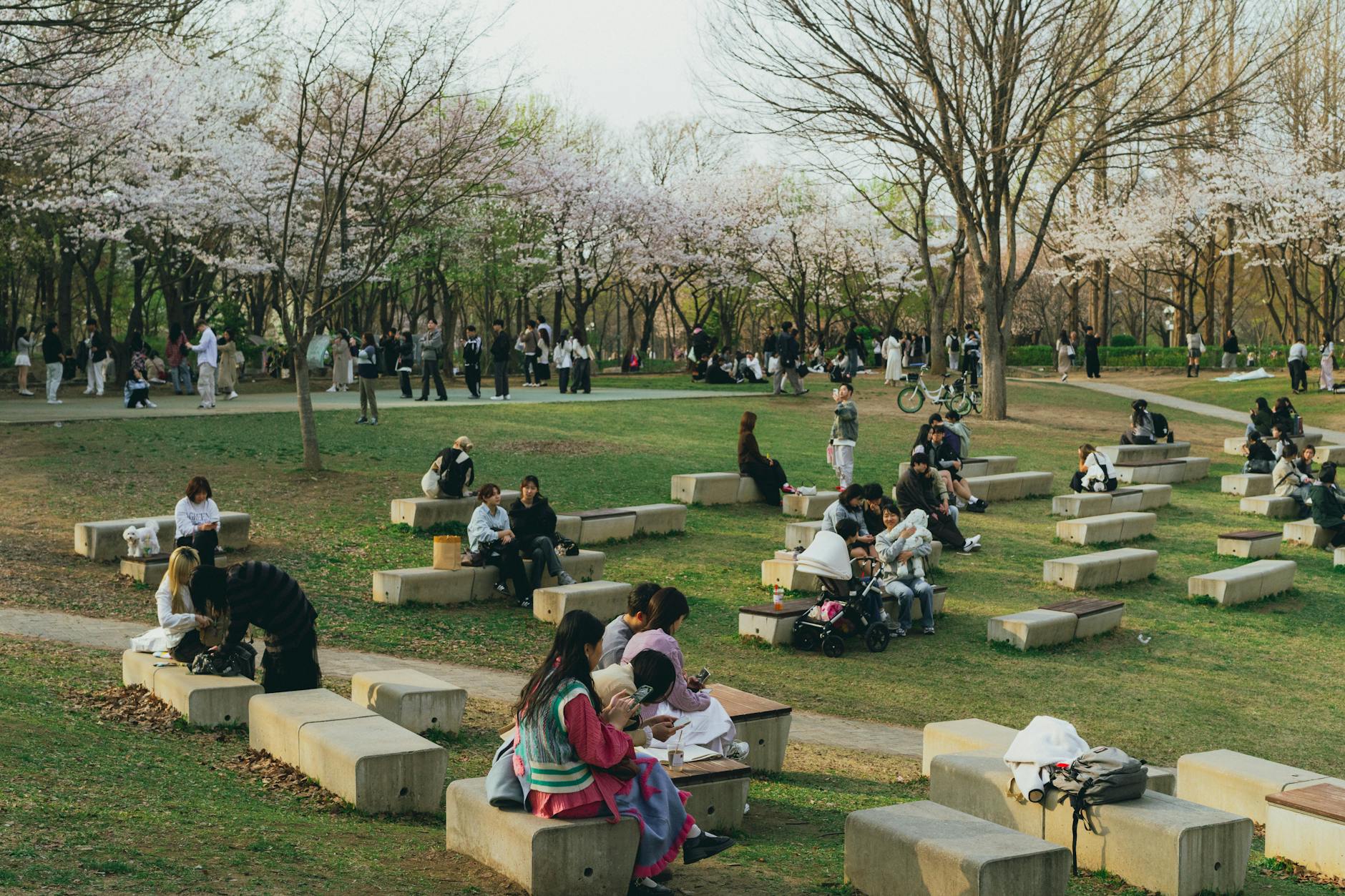
While LEED is by far the best-known sustainable rating system on the market today, it has competitors. Some systems, like the Living Building Challenge, cover a similar holistic spectrum of requirements; others, like Passive House or WELL, focus on a smaller range of factors such as energy efficiency or occupant well-being. SITES, or the Sustainable Sites Initiative, acts as a complement to LEED by focusing on the sustainability of outdoor spaces. If LEED is mainly focused on architecture, SITES can be thought of as LEED for landscape architecture, or as a significant expansion of LEED’s Sustainable Sites credit category.
Appropriate to its focus on the project site, SITES is based around a framework or conceptual basis of conserving, managing, restoring and generating ecosystem services, i.e. the benefits provided to human beings by natural systems, from carbon sequestration to pollination to shade and evapotranspiration, thus providing a substantial improvement to human quality of life. The purpose of SITES is to maximize the value of these natural resources to human users of the site, and to the locality and planet generally.
SITES was developed between 2006 and 2014 through a collaboration led by the United States Botanic Garden, the Lady Bird Johnson Wildflower Center at The University of Texas at Austin, and the American Society of Landscape Architects (ASLA). USGBC and GBCI have long played a role in the development of SITES, and there is considerable cross-pollination between SITES and LEED. GBCI now administers SITES.
SITES is widely applicable: any project type may be SITES certified, from parks and gardens to industrial facilities and infrastructure. There are very few limitations: only the project area outside of occupied buildings is counted, the minimum project size is 2000 square feet, and only new construction or major renovation projects are eligible. Practically this means that SITES is applicable to just about any project, and, as of Summer 2024, 360 projects worldwide have been certified using SITES, amounting to 1.3 billion gross square feet of landscapes and outdoor spaces.
Like LEED, SITES evaluates projects for compliance with both prerequisites and credits. Projects must comply with 18 mandatory prerequisites in order to be considered, and may earn up to 209 points contained in 48 credits. Projects can be certified at four certification levels: Certified (70-84 points), Silver (85-99 points), Gold (100-134 points) and Platinum (135+ points).
Credits are divided into 10 credit categories which reflect different stages of a SITES project’s development:
- Site Context rewards the analysis and planning of a project to protect existing natural features, prioritizes the redevelopment of degraded sites to reduce pressure on greenfield sites, and encourages looking beyond the site boundary to reduce transportation pollution, improve human health through physical activity, and foster community.
- Pre-Design and Planning rewards the use of an integrated design team and of a site assessment to inform design choices. The team should include experts in natural systems, design, construction and maintenance, as well as community representatives, the project owner, and site users.
- Water rewards efforts to conserve potable water, maximize the use of rainwater and other alternative water sources, and protect water quality through minimizing runoff. It encourages the restoration or mimicking of natural systems.
- Soil and Vegetation rewards the maintenance or restoration of healthy soils to filter pollutants, prevent excess runoff, erosion, sedimentation and flooding. It encourages the use of appropriate vegetation (native and adapted species) and the management of invasives to reduce irrigation needs, improve habitat, reduce maintenance and promote regional identity.
- Material Selection rewards careful material choices that reduce landfill waste and preserve natural resources, reduce greenhouse gas emissions and improve building lifespan.
- Human Health and Well-Being rewards the creation of healthy and comfortable outdoor spaces that promote physical and mental well-being. It encourages access to nature, physical exercise, social interaction and stronger communities.
- Construction rewards the implementation of sustainable construction practices to minimize environmental impact. It encourages making contractors aware of sustainable goals such as air quality, zero waste, vegetation and soil preservation and restoration, and runoff prevention.
- Operations and Maintenance rewards the adoption of sustainable practices for ongoing maintenance and management of a site. It encourages the conservation of resources and energy and the reduction of pollution throughout the project’s life.
- Education and Performance Monitoring rewards the education of the public about sustainable landscape practices, using the project as an example.
- Innovation and Exemplary Performance rewards the pursuit of innovative solutions and exceeding credit thresholds with extra credit.
As may already be evident to readers familiar with LEED, SITES and LEED share a lot of DNA, and projects can benefit from synergies between LEED and SITES credits. Earning certain LEED credits will automatically earn corresponding SITES credits, and vice versa.
Developing a landscape with SITES in mind promotes the project’s sustainability and resilience through reducing material consumption in construction and maintenance, maintaining biodiversity, using low-impact development strategies to minimize adverse climate impacts (flooding, extreme heat) and, most critically, maintaining or regenerating ecosystem services such as carbon sequestration and pollination which support a richer and more productive relationship between site users and the environment.
Thanks for reading! Please like this post if you enjoyed the content, comment if you have any questions, and consider subscribing to this blog for future posts.
 Green Synergies
Leave a comment