Sustainable designers look for every opportunity to optimize the performance of the buildings they design, to benefit building owners, users, and the planet. This optimization embraces all parts of a conventional building, from HVAC equipment to wall systems to building operations. But one of the biggest opportunities to improve a building’s sustainable performance is its roof.
More than any other part of the building envelope, the roof is most exposed to sunlight and to rain. Sunlight heats the building, requiring excessive air conditioning to keep the interior at a reasonable temperature. Hot roofs raise the air temperature around them, reducing the performance of roof-mounted air conditioners and photovoltaic arrays, and contributing to the urban heat island effect. Rainwater drains off the roof and directly into the stormwater system, overloading older stormwater systems and causing backflow which can cause flooding and even sewage pollution. Sustainable projects seek to improve energy efficiency, reduce the heat island effect, and manage rainwater responsibly on-site, so choosing the wrong roofing system can be a major liability for a sustainable project.
But roofs are also a huge opportunity for the sustainable designer. The roof is a huge collection source for solar energy that can be turned into useful hot water and electricity, not just into unwanted heat gain. The rainwater that is a liability in conventional designs can be collected to use for irrigation or indoor water uses. The roof surface can be turned into a vegetated space that absorbs rainwater, reduces the heat island effect, insulates the building and provides habitat for local fauna and space for recreation. But, to realize these benefits, designers must go beyond improvements to conventional roof systems, such as higher levels of insulation, and choose high performance roof systems.
High performance roof (HPR) systems are roof systems that help a project achieve multiple sustainability goals – in other words, synergistic sustainable roofing systems.
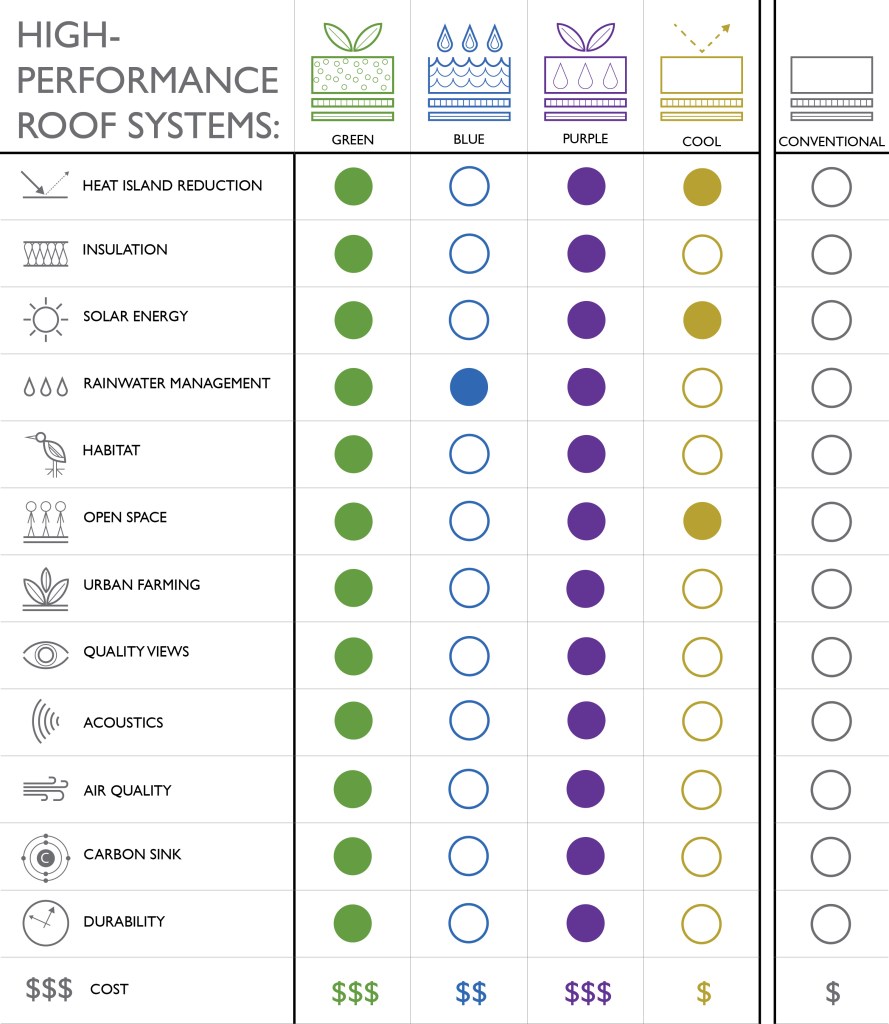
This series will consider four distinct high-performance roof assemblies:
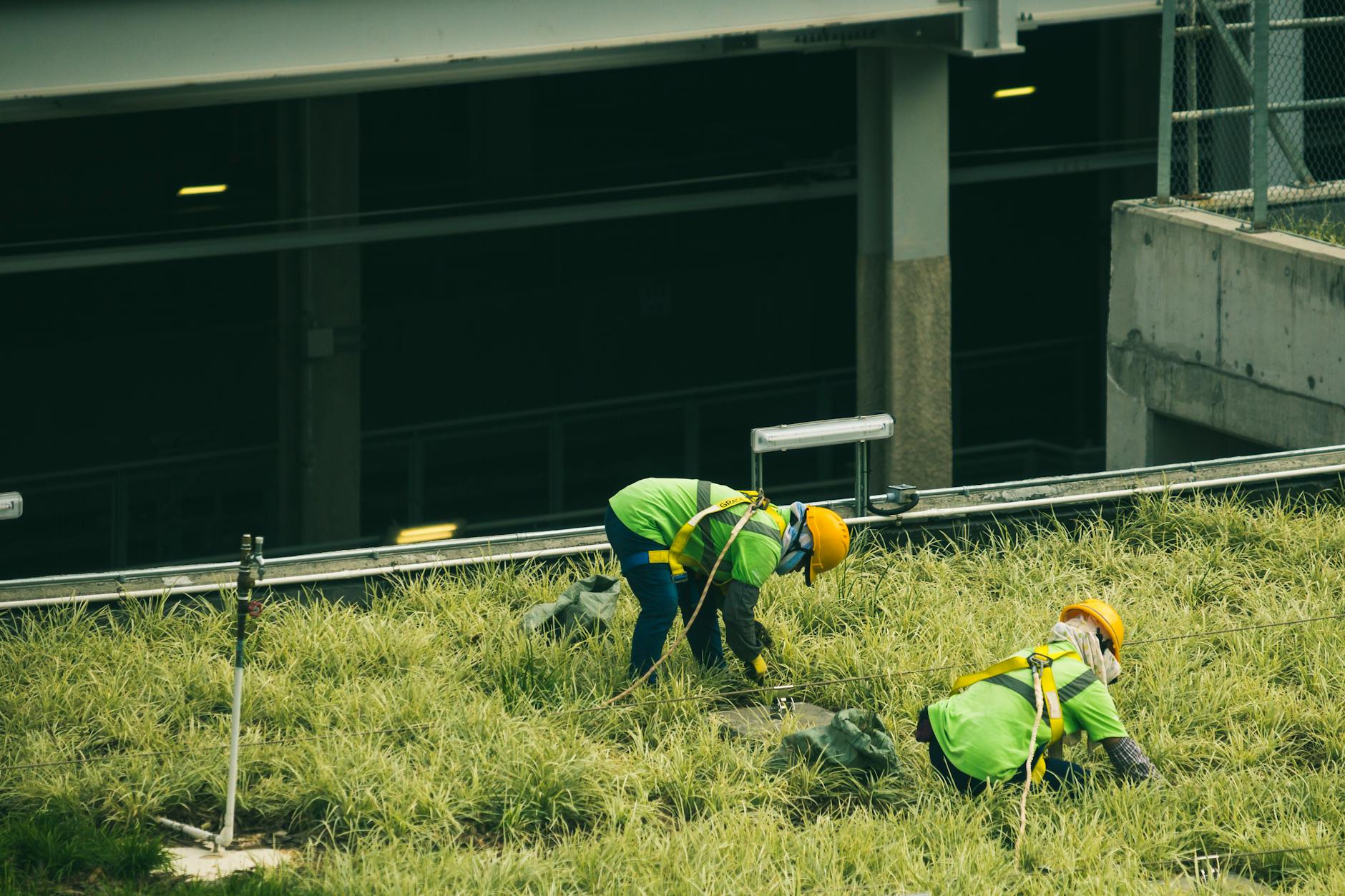
- Green (vegetated) roofs: vegetation in a growing medium over a drainage layer, over a conventional roof system.
- Blue (water-detaining) roofs: devices to slow water drainage to reduce overloading of stormwater systems during rain events.
- Purple (water-retaining) roofs: like green roofs, but with a spongey water-retention layer underneath to retain nearly all rainwater.
- Cool (high-reflectance) roofs: roof surface with a high solar reflectance index (SRI), reflecting most of the sun’s energy and leading to a cooler roof.

Each of the four posts in this series will consider one of the HPR systems in depth and discuss how sustainable strategies can be integrated with them, leading to powerful synergies. Each HPR type will be analyzed against thirteen metrics which illustrate the costs and benefits of each system:
- Heat Island Reduction: does the system reduce the building’s contribution to the urban heat island effect?
- Insulation: does the system contribute additional, incidental insulation beyond conventional insulation?
- Solar Energy: does the system improve the performance of photovoltaic arrays that perform better in cooler temperatures?
- Rainwater Management: does the system reduce the building’s contribution to stormwater runoff?
- Habitat: does the system provide habitat for local wildlife?
- Open Space: does the system provide a more pleasant environment for people occupying the roof?
- Urban Farming: does the system allow for food-producing plants to be grown?
- Quality Views: does the system have a biophilic appearance beneficial to building occupants?
- Acoustics: does the system provide sound insulation?
- Air Quality: does the system clean the air?
- Carbon Sink: does the system sequester carbon and reduce greenhouse gas emissions?
- Durability: will the system last longer than a conventional roof system?
- Cost: is the system more expensive than a conventional roof system?
The roof system is one of the most impactful ways to make a building sustainable. I hope this post will encourage you to ask more from the buildings you design, own and occupy.
Thanks for reading! Please like this post if you enjoyed the content, comment if you have any questions, and consider subscribing to this blog for future posts.
 Green Synergies
Leave a comment