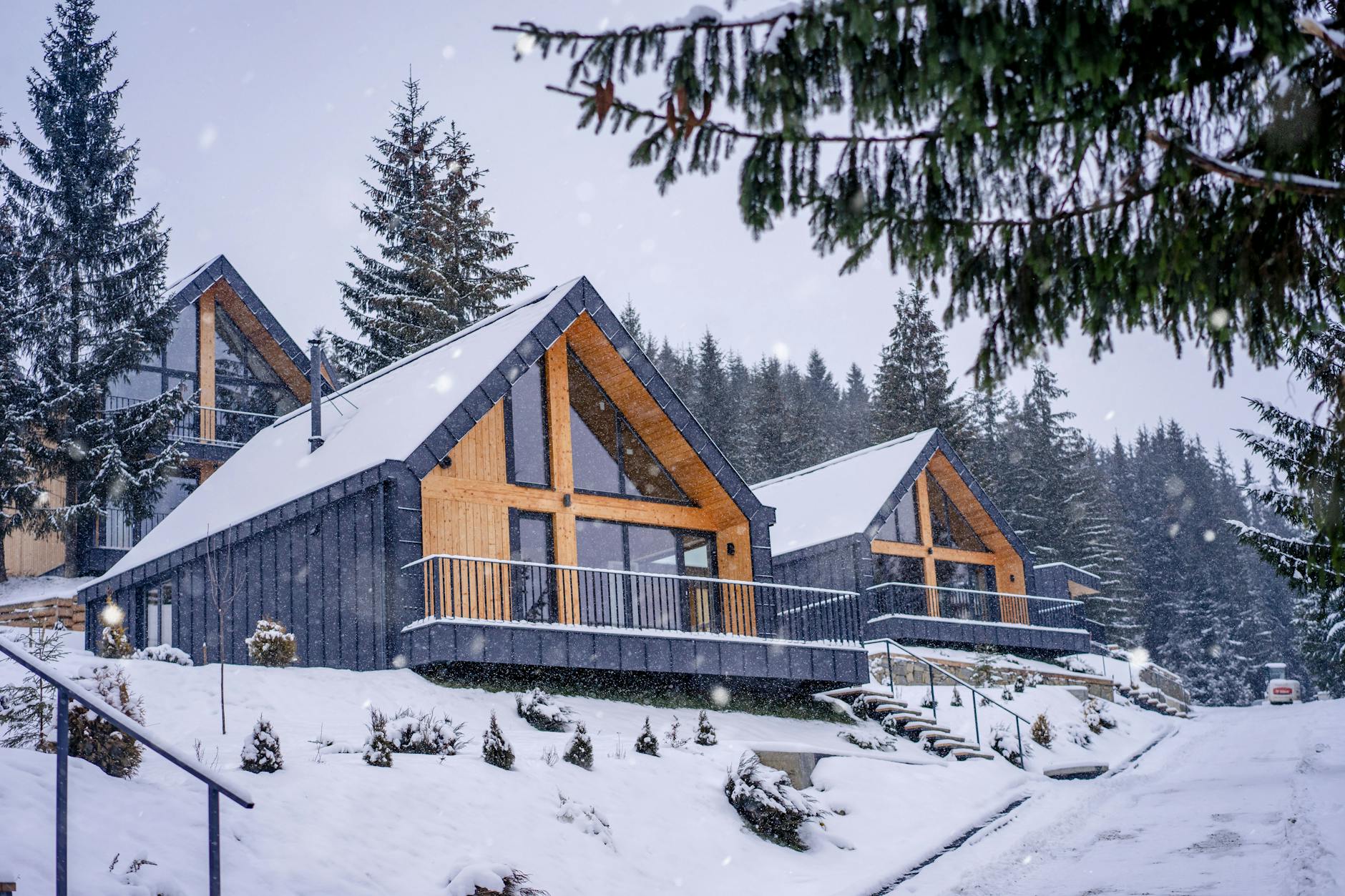
Design is one thing; results are another. Many buildings advertise themselves as sustainable; many buildings receive LEED certification, but how many perform according to their lofty green goals? LEED, as a documents-based system, bases its ratings on the information submitted by project teams, allowing projects to retain their design and construction-based ratings even if they underperform their targets.
Other systems take the approach of independently verifying that a project has met its sustainability goals after construction. Phius (Passive House Institute US) is one of these verification-based systems.
Concept
Phius is an organization dedicated to promoting sustainable construction through energy efficiency and is the North American offshoot of the Passive House Institute, which got its start in Austria in the 1980s. Their sustainability rating system retains strict standards for energy efficiency, air tightness, and thermal performance but distinguishes itself from its European cousin by taking a climate-zone specific approach to performance targets to account for the highly variable climates found in North America.
Unlike LEED or the Living Building Challenge, PHIUS is not a truly holistic system, with no consideration of urban planning, site design, materials or water use, except as they impact energy performance and interior environmental quality. But its focus on energy and designing an efficient building envelope means that it has become a gold standard for measuring energy efficiency in buildings.
Phius standards are built on a detailed application of building science principles to produce, first and foremost, passive buildings that retain heat in winter and coolness in summer. They emphasize:
- Thermal control (or thermal conduction control) through insulation and thermal bridge elimination.
- Air control (or thermal convection control) through airtight assemblies and balanced ventilation with heat and moisture recovery.
- Radiation control through high-performance glazing, shading and careful daylighting.
- Moisture control through vapor diffusion control and humidity control.
This focus on strict control of the building envelope is intended to produce a comfortable, healthy environment and low energy costs along with resilient, durable structures with excellent acoustic performance while offering projects a clear path to net zero by reducing energy loads and thus the work that renewable energy must do.
Phius has two standards, Phius CORE and Phius ZERO. Phius CORE offers two pathways: performance (PHIUS CORE) and prescriptive (PHIUS CORE Prescriptive). The prescriptive path is limited to single-family dwellings only; the performance path applies to any building type. Phius ZERO exceeds Phius CORE and requires buildings to achieve net-zero source energy.
Phius CORE
Phius CORE is based on a three-part approach:
- For residential projects, Phius CORE builds on third-party programs like ENERGY STAR, EPA Indoor airPLUS, and DOE Zero Energy Ready Home that provide quality baselines for design and construction inspections.
- Phius CORE sets performance limits for both peak and annual space conditioning loads to provide comfort, thermal resilience during power outages, reduced mechanical system sizes and decreased operating costs.
- Phius CORE sets limits on source energy depending on building size and occupant load to fully account for the building’s use of energy resources.
Phius claims to target “the sweet spot where aggressive energy and carbon reduction overlap with cost effectiveness” by varying its requirements depending on climate zone and building characteristics, a flexibility that sets it apart from its more severe European cousin, Passive House Institute, which has one standard for all situations.
For example, a residential building in Alabama with an envelope surface area of 3750 square feet, an interior conditioned floor area of 1500 square feet and four bedrooms would be allowed an annual heating demand of 2.4 kBtu/ft²yr, an annual cooling demand of 16.6 kBtu/ft²yr, a peak heating load of 3.6 Btu/ft²hr and a peak cooling load of 3.2 Btu/ft²hr, and be allowed a source energy of 3425 kWh/person/yr. The same building in North Dakota, by contrast, would be allowed an annual heating demand of 10.7 kBtu/ft²yr, an annual cooling demand of 5.2 kBtu/ft²yr, a peak heating load of 7.6 Btu/ft²hr and a peak cooling load of 2.3 Btu/ft²hr. The allowed source energy per person remains the same, however, as it always will for the same type of building, at least in the US. Non-residential buildings use kBtu/ft²yr as a measure of source energy, with 24.5 kBtu/ft²yr being the standard for all buildings in the US.
To further encourage a push to carbon zero, Phius CORE allows fossil fuel combustion on site but requires electrification readiness and Phius CORE Prescriptive bans on site combustion entirely.
Phius ZERO
Building on CORE, Phius ZERO is the newer, higher performance Phius standard intended to achieve net zero source energy. Phius ZERO sets standards for:
- Passive conservation of energy or passive building principles to reduce heating and cooling demands through:
- Improved thermal performance of the building envelope
- Minimized thermal bridging
- High performance windows
- Optimized solar gain
- Balanced ventilation with heat recovery
- Airtightness, with a pass/fail standard for most buildings of 0.06 CFM50 per square foot of enclosure. Full building pressurization tests are required.
- Renewable energy offsets from either on-site or off-site sources.
- Active conservation of energy through increasing the efficiency of lighting appliances and mechanical systems to reduce energy use after passive strategies have decreased heating and cooling load.
- Moisture design to avoid the risk of moisture damage and mold.
- Window comfort by setting a maximum window U-value to avoid windows that feel too hot or too cold.
- Electrical vehicle charging infrastructure
- Combustion and fireplace safety, including a ban on fossil-fuel combustion and strict standards for wood-burning fireplaces and woodstoves
- 3rd Party On-Site Inspection and Quality Assurance throughout the construction process, conducted by a Phius Certified Rater or Verifier.
Verification
Phius distinguishes itself from many other sustainable rating systems by requiring independent verification of results, rather than just documented calculations and reports. Single family residential projects can be certified by a Phius Certified Rater; multifamily or non-residential projects must be certified by a Phius Certified Verifier.
Testing and verification include foundation and pre-drywall inspection, whole-building airtightness testing, ventilation system balancing and commissioning and other tests.
Phius also offers Phius Certified Consultant (CPHC) certification for architects, engineers and other design professionals, Phius Certified Builder (CPHB) for contractors, Phius Certified Trades Professional and Phius Associate.
Impact
From the first passive house in the US, the Smith House in Urbana, Illinois by Katrin Klingenberg in 2002, Phius has grown to become an important player among sustainable rating systems, with 416 projects and 5.1 million square feet certified as of 2023. The largest Phius project to date is 425 Grand Concourse in the Bronx, a 26-story high rise with 277 affordable apartments, completed in 2022.
With its strict but climate-adapted emphasis on energy efficiency, Phius promises to grow in prominence as sustainability and net-zero targets become an increasingly standard part of building, and ambitious clients vie with each other to reach even higher sustainability goals for their projects.
You can find more information about Phius on the Phius website.
 Green Synergies
Leave a comment