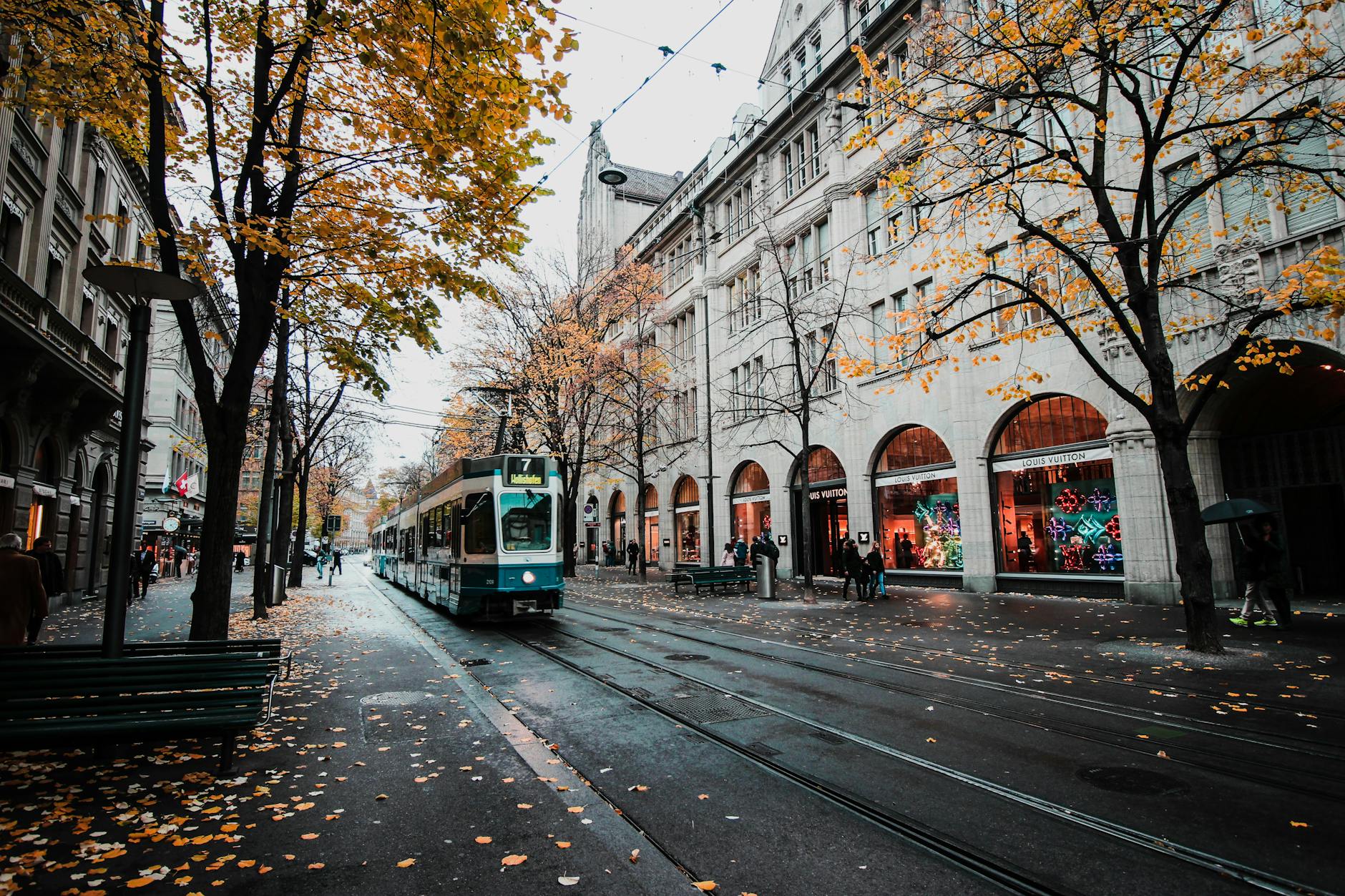
As the earth’s population increases, the responsible use of land becomes an increasingly vital concern for human welfare. But sprawling development patterns continue to deplete irreplaceable natural resources, increase pollution from extended transportation networks, require more resources for building and maintaining infrastructure and inhibit sustainable community formation due to physical distance and poor connectivity. The late 20th century land development patterns common in North America especially are unsustainable in this century – we have built fragile cities that are unlivable without a constant influx of rare and vulnerable resources.
In contrast, sustainable land development creates built environments that meet present needs without compromising those of future generations and create livable and resilient cities. This holistic approach to development considers environmental, social, and economic factors, aiming to preserve sensitive land, conserve resources, and create enriching communities.
To this end, planners pursue two interconnected strategies: creating compact, connected, climate conscious communities, and building enduring communities, not temporary containers.
Strategy 1: Compact, Connected and Climate-Conscious
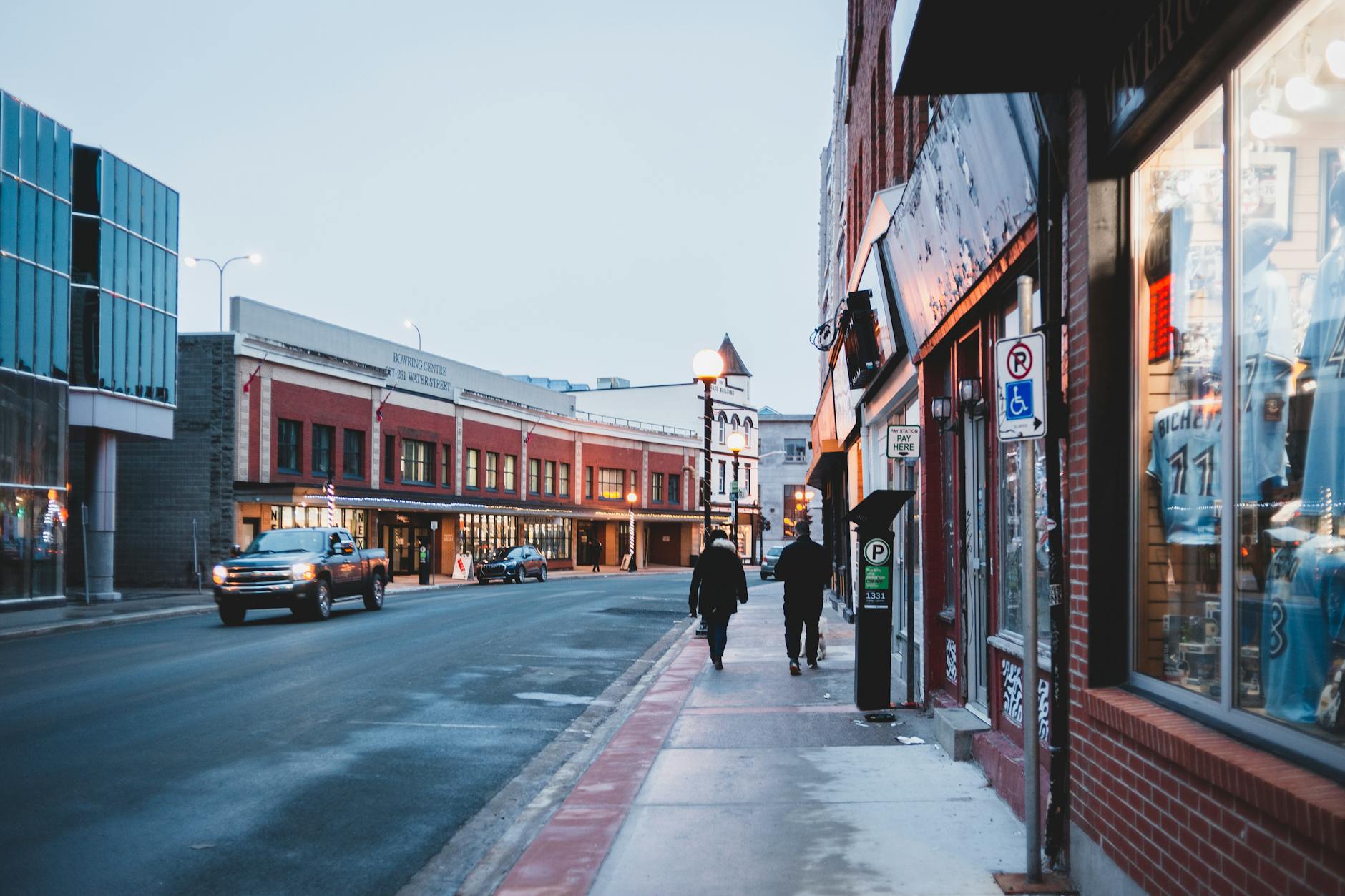
Land development should be compact, connected, and climate conscious – that is, it should avoid sprawl, provide internal and external connections via roads, sidewalks, and public transit, and consider environmental factors like solar orientation and wind patterns in its layout.
Compact
Compact development means efficient land use rather than just density – fundamentally, compact development means avoiding land waste. This translates primarily to infill development—using available land within already developed areas, such as vacant lots or obsolete buildings—to maximize the value of previously developed parcels.
Infill development protects natural resources by minimizing development on sensitive land like endangered species habitats and farmland. Even when greenfield development is necessary, building near existing development and using a compact layout minimizes greenfield land use.
Infill sites also come with existing infrastructure (roads, sewers, gas and electrical lines) in many cases, reducing development costs and the public cost of maintaining extensive infrastructure.
And compact development patterns reduce driving distances and encourage walking and cycling, reducing car-dependence and the burning of fossil fuels to power vehicles.
Most importantly though, infill development revitalizes existing communities rather than creating new ones from scratch, taking advantage of the history and unique texture of existing neighborhoods and bringing jobs to depressed areas while increasing property values and promoting a denser, mixed-use development that makes it easier for residents to walk or bike to fulfill their daily needs. Infill development knits together communities, filling in the blank spaces left by sprawl, and improves urban quality of life.
At base, compact community is a sustainable one because it makes the best use of available resources, rather than wasting them in useless sprawl; because it reduces non-renewable resources expended in construction and transportation; and because it helps create vibrant, tight-knit communities that can sustain themselves socially. Compact communities are sustainable and resilient communities.
Connected
Compact development enables connected development, allowing residents to easily walk to local destinations (school, friends’ houses, stores, parks) or use public transit to reach neighboring towns, fostering a pattern of natural exploration or dérive, rather than intentional car-dependent travel.
Prioritizing walkability means enabling access to basic services within a short distance (¼ to ½ mile) via comfortable sidewalks, trails, or safe bike routes, and efficient transit systems (buses, trains) for longer distances or accessibility. These developments utilize an interconnected street network (not necessarily rectilinear) to facilitate movement to all parts of the development by multiple routes, ensuring access to jobs, housing, services, and public spaces throughout the development. Cul-de-sacs are the bane of connected development.
A connected community is sustainable because it allows residents to fully utilize and enjoy the efficient land use afforded by a compact community.
Climate Conscious
Development must consider local climate: an urban pattern suitable for New Mexico won’t work in New Jersey or in Newfoundland. Street and building layouts, public spaces, and building designs should respond to the local climate.
Prior to the invention of air conditioning, climate-conscious development that considers building and street layouts relative to the sun and wind was standard, but it is a lesson that modern cities have forgotten. Local climate should shape our cities, so that we cluster buildings for shade in hot, arid climates, while in tropical climates we use wide spacing for ventilation, and in northern temperate climates we maximize southern sun exposure. Subdivisions should not look the same in southern Texas as they look in northern Michigan.
Local climate should also inform development location, density and basic feasibility. Some locations are simply unsuitable for development due to extreme climate conditions (heat, cold) or lack of access to water, infrastructure, or other resources.
Some common sustainable development strategies are geographically specific. While desirable, walkability is impractical with sidewalks exposed to extreme heat or cold. In such climates, indoor or underground spaces may be necessary. A metro system is effective in dense urban areas but useless in rural districts. Development is inherently local.
Fundamentally, a climate-conscious community is sustainable because it uses resources more efficiently than conventional development and is more resilient to climate change impacts because of its use of passive strategies to maintain resident comfort.
Strategy: Enduring Communities not Temporary Containers
[[mixed use ie what you do à center and identify ie where you do it, why you do it à green buildings and renewable energy ie how you maintain it]]
Abstract development forms are useless without livable, sustainable buildings, streets, and public spaces. Sustainable developments are mixed-use, providing residents with essential daily services. They have defined centers and a strong identity, fostering resident involvement. They are comprised of durable, resource-efficient buildings (energy, water, materials) and are powered by reliable energy sources for resilience. They are real and vital places to live, work and play, not abstract containers for abstract populations.
Mixed-Use
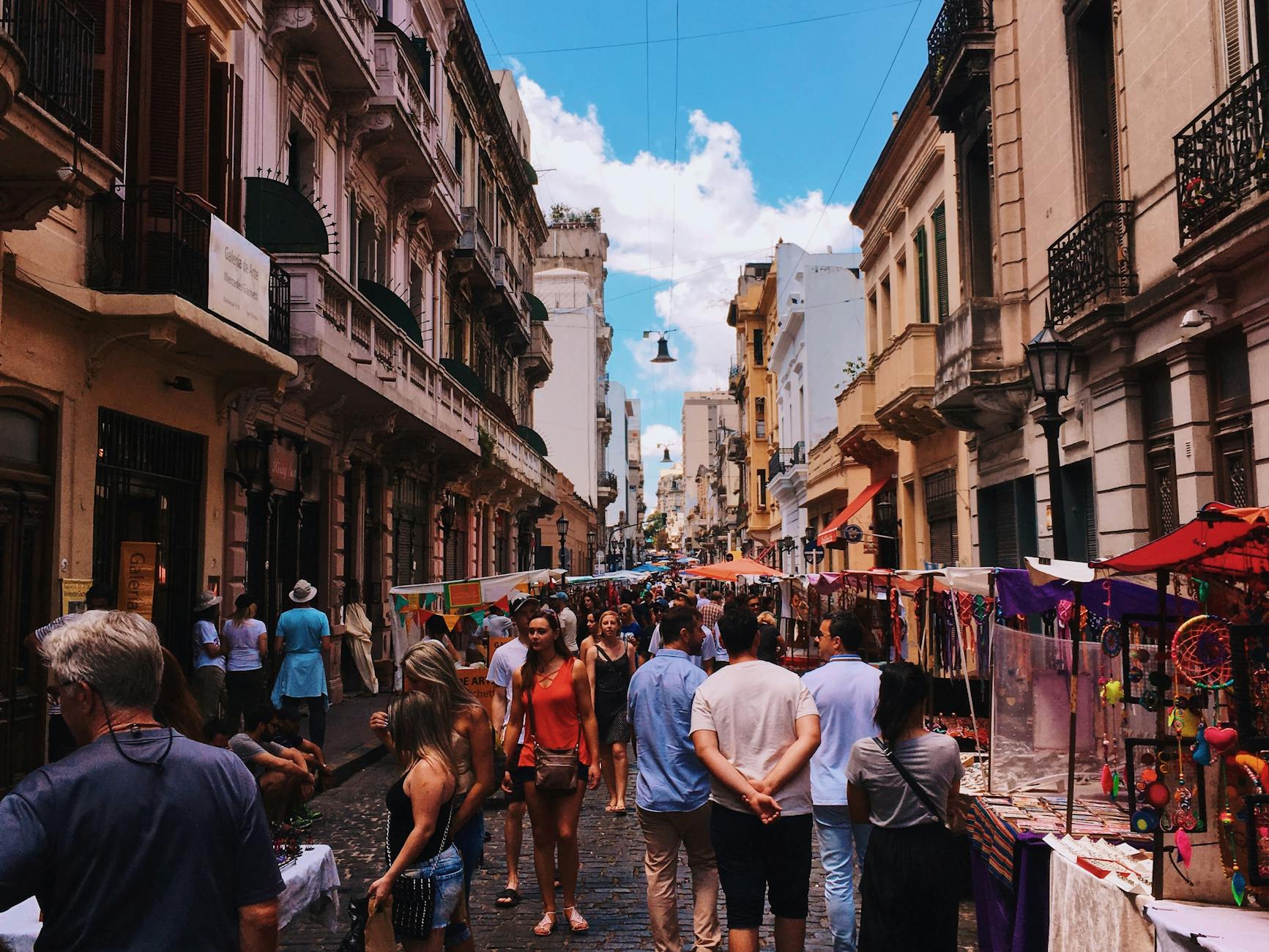
Mixed-use development combines residential uses and basic services (shops, schools, recreation, and employment) within the same neighborhood or building. This allows residents to access daily necessities locally, creating more walkable and engaging streets.
In other words, mixed-use development is the way our towns and cities were developed before the rise of automobiles and of use-based zoning and the functionalist, modernist approach to urban planning that became popular in the mid-twentieth century. It is an organic approach to urban planning that allows human life to exist in its natural, complicated urban form, rather than chopped up into rationalist containers that require a car to get between them.
Mixed-use development is increasingly common in North America, but it is still frustrated in some areas by arcane zoning laws. More fundamentally, the impact of new mixed-use developments is often limited by their isolation amid car-dependent development that reduces them to urban islands with huge parking garages. Hopefully, in the future, these islands will become archipelagos, and then, eventually, vibrant and sustainable continents.
Center and Identity
Mixed-use is what people do in well-planned cities, the patchwork of overlapping activities that make an urban area vibrant; center and identity is what gives cities meaning. It is the iconic familiarity that distinguishes New York from London, Paris or any little midwestern town, different in nature from the abstractions of density or connection.
Rather than a functional container for human animals, a community is a place with a distinct identity in which its residents participate, a sense of place and belonging that is fostered by participation in community activities and supported by urban planning and architecture. Towns should be organized around a recognizable center, a “there” that is part image and part experience of place. Traditionally, towns had town squares or main streets which fulfilled this function, and these tried and tested solutions can still be effective. There may be other more modern alternatives that the ingenuity of designers can envision, or that future expedience may invent out of necessity, but the need of a physical, identifiable focal point is a constant requirement for any physical community.
Green Buildings
Urban form only does so much work in the sustainability equation; sustainable use of resources comes down to the details of building design, construction and operation. Sustainable communities need buildings that are energy and water efficient and are designed with the local climate in mind. They also need buildings that are durable and long-lasting, designed flexibly for renovation by future generations for now unimagined uses.
Reliable Energy and Infrastructure
And finally, sustainable communities require reliable access to sustainable energy, water and material resources that can make communities resilient against the unpredictable shocks of a rapidly changing world. Local renewable energy resources in community facilities and in buildings can make this possible, ideally designed to remain fully functional during emergencies like power outages. Respect for the availability of water resources is especially key in water-challenged regions.

The Future
The major challenge to sustainable land development is the inertia of established land use patterns. Especially in North America and other regions developed extensively in the mid-to-late 20th century, automobile-dominated layouts have led to unsustainable sprawl, relying on extensive infrastructure networks that hinder resilience and require resource-intensive service delivery. Changing this requires altering the fundamental infrastructure underlying community formation, which is difficult and expensive to do.
Despite these challenges, sustainable land development is essential for creating healthy, equitable, and resilient communities that benefit both current and future generations by carefully considering environmental, social, and economic factors.
Happily, just as the unsustainable patterns of the late twentieth century are difficult to erase, so to the sustainable foundations we lay down for our cities in this century will endure like urban patterns always have and shape a more sustainable future in centuries to come.
 Green Synergies
Leave a comment