
Zero-carbon means that something emits no carbon dioxide in its operations, such as a wind turbine or solar panel; net-zero carbon means that something balances its carbon emissions and carbon absorption. High-performance buildings seek to reduce their energy use and dependence on fossil fuels, supporting the decarbonization of the energy grid, but this goal can be challenging for designers because carbon emissions are not only caused by burning fossil fuels to produce electricity or to heat structures; carbon is also embodied in the very materials buildings are made of. Buildings can achieve net-zero carbon emissions by using zero carbon energy sources, but they must also use low or no-carbon materials.
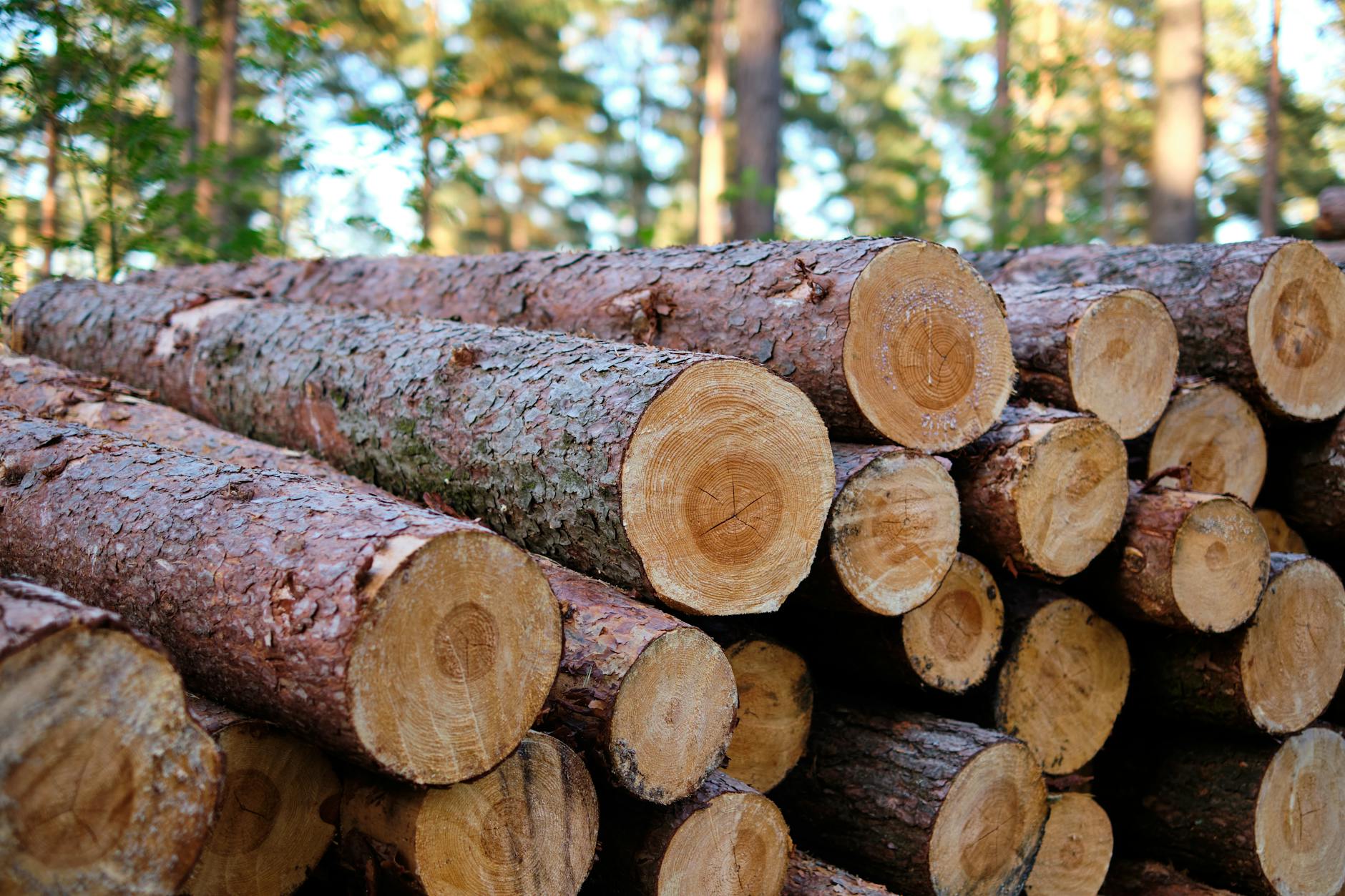
Common construction materials like concrete, brick, steel and aluminum are carbon-intensive in their manufacture; other materials, such as wood, are carbon-negative because trees absorb large amounts of carbon dioxide during their growth that more than balances the carbon that may be emitted to turn them into buildable lumber.
LEED v5 points the way towards a decarbonized future by raising the bar for projects seeking the highest level of LEED certification, LEED Platinum. To achieve LEED Platinum, projects must achieve four otherwise optional decarbonization-related credits:
- EAc1: Electrification requires the project to eliminate on-site combustion to achieve maximum points.
- EAc3: Enhanced Energy Efficiency requires projects to achieve 8 points (New Construction) or 5 points (Core and Shell), requiring a 24% energy reduction from baseline.
- EAc4: Renewable Energy requires that 100% of site energy comes from renewable energy sources, either on- or off-site.
- MRc2: Reduce Embodied Carbon requires a 20% reduction in the project’s embodied carbon from a “business as usual” baseline.
This blog has already covered EAc1, EAc3 and EAc4; now, in this post, we’ll dive into MRc2: Reduce Embodied Carbon to understand both what project teams need to do for credit compliance, and how these requirements affect design.
Credit Overview
The intent of MRc2 is “to track and reduce embodied carbon of major structural, enclosure, and hardscape materials from construction processes on new construction and renovation projects.” This credit follows from the mandatory prerequisite MRp2 Quantify and Assess Embodied Carbon, an analytical exercise that identifies the top sources of embodied carbon among major building materials.
This is a valuable credit, providing up to 6 points for New Construction projects or 8 points for Core and Shell. As mentioned above, projects seeking LEED Platinum certification must reduce embodied carbon by 20%, which can be achieved through MRc2 Option 1 or Option 2, Path 1.
Credit Details
Option 1: Whole Building Life Cycle Assessment (1-6 points New Construction, 1-7 points Core and Shell)
This option requires project teams to conduct a cradle-to-grave whole building life cycle assessment (WBLCA) that analyzes a project’s structure, enclosure and hardscape materials for embodied carbon. A life cycle assessment (LCA) analyzes the environmental costs of an individual product (such as a wood 2×4) from resource extraction (cutting down a tree) through manufacturing to waste disposal or recycling. A WBLCA aggregates the LCA values of all building components, treating the building itself as a single product.
The WBLCA required by MRc2 considers LCA Modules A–C. Module A covers the extraction of raw materials (A1), transportation (A2), manufacturing (A3), transportation to the construction site (A4) and construction or installation (A5). Module B (B1-7) covers building operations including maintenance, repair, replacement, and refurbishment of materials but excludes operating energy and water use for this credit, since they are already covered in other LEED credits. Module C (C1-4) covers deconstruction/demolition and waste disposal or recycling.
The WBLCA report should include the following impact categories:
- Global warming potential (GWP) (greenhouse gases), in kg CO2e
- Depletion of the stratospheric ozone layer, in kg CFC-11e
- Acidification of land and water sources, in moles H+ or kg SO2e
- Eutrophication, in kg nitrogen eq or kg phosphate eq
- Formation of tropospheric ozone, in kg NOx, kg O3 eq, or kg ethene
- Depletion of nonrenewable energy resources, in MJ using CML/depletion of fossil fuels in TRACI
Projects will earn points based on their reductions of these metrics compared to a baseline building:
- 2 points to meet the baseline
- 3 points for a 10% reduction
- 4 points for a 20% reduction (Platinum requirement)
- 5 points for a 30% reduction
- 6 points for a 40% reduction
It is unclear in credit language if the reduction is total or per impact category, but the latter seems more likely since this is the standard used in LEED v4’s comparable Building Life Cycle Impact category.
Baseline and proposed buildings must be comparable in size, architectural complexity, number of floors, programmatic function, building type, orientation, operating energy, service life and so on. Baseline buildings must use standard designs and material types for their type of building: for example, a high-rise apartment building would typically use a reinforced concrete structure, which could function as a baseline, but the project team might explore a mass timber structure to achieve lower embodied carbon. Teams may use an earlier version of their design as a baseline if they have iterated to create a lower carbon version.
Credit guidance recommends several sources for understanding WBLCAs, including guidelines from the National Research Council Canada which are publicly available. Detailed guidance on how to choose or create a baseline building is found on page 70-2.
Option 2: Environmental Product Declaration (EPD) Analysis (1-3 points New Construction, 1-4 points Core and Shell)
Path 1: Product Average Approach (1-3 points)
Projects can earn points for reducing embodied carbon based on EPDs for materials used in construction. Reductions are calculated from industry averages. Projects can earn:
- 1 point for meeting industry averages
- 2 points for a 20% reduction in global warming potential (Platinum requirement)
- 3 points for a 40% reduction in GWP
An EPD is a standardized summary of an LCA conducted by the product manufacturer or by a third-party organization based on industry-recognized standards. Using EPDs alone to evaluate a buildings carbon impact may miss construction-related emissions not tied directly to a material’s manufacturing.
This credit requires that GWP reductions be based on industry average values (as defined by the EPA or a similar organization) rather than comparison to a baseline building.
Path 2: Materials-Type Approach (1-2 points New Construction, 1-3 points Core and Shell)
This path takes as step down in completeness of carbon analysis by looking at EPD-demonstrated embodied carbon impact reductions from only a few materials. It requires that project teams demonstrate that structural, enclosure, and hardscape materials for targeted material types have lower embodied carbon impacts than industry benchmarks as demonstrated by product-specific Type III EPDs. Teams should track the GWP per unit of the materials installed.
Projects can earn:
- 1 point for three material categories
- 2 points for five or more material categories
Rather than reducing GWP of the whole building (Option 1 or Option 2, Path 1) this option focuses on only a few materials so it is worth fewer points.
Option 3: Track Carbon Emissions from Construction Activities (1-2 points)
Construction activities generate carbon emissions, primarily through burning fossil fuels and using electricity to power construction equipment. This option rewards projects for keeping track of these emissions.
Projects can earn:
- 1 point for tracking carbon emissions from fuel and utility usage for contractor activities on the jobsite
- 2 points for adding subcontractor activities
This only examines one stage of material carbon installations, installation (Module A5), so it receives fewer points than Options 2 or 3. However, Option 3 can be combined with Options 1 and 2 to earn full points.
Readers can find basic credit requirements in the LEED v5 Credit Library and additional interpretation in the LEED v5 Reference Guide.
Design Strategies
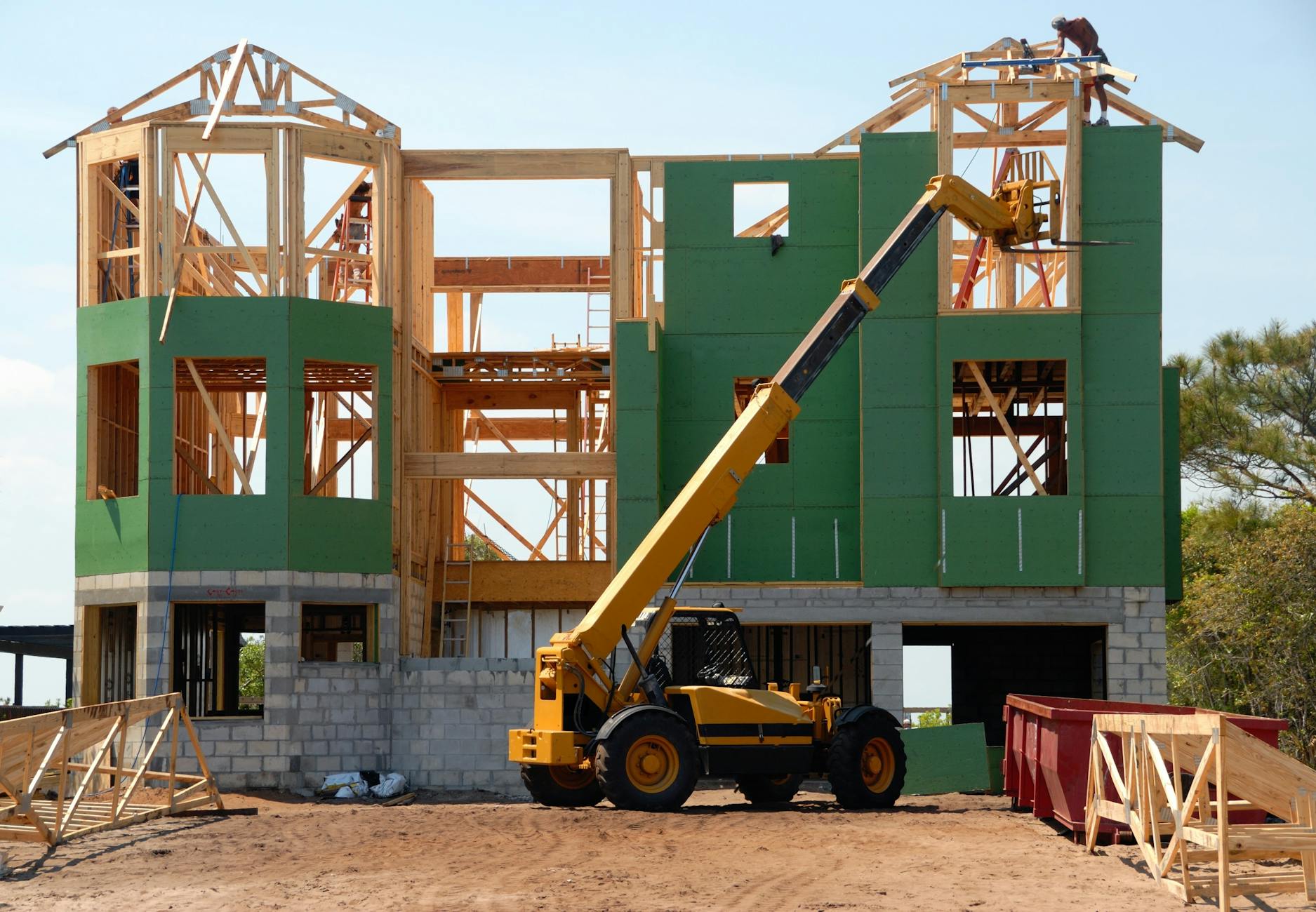
Using LCAs or other means to track embodied carbon in materials throughout the design process is vital to achieving a low-carbon project, but how do project teams make initial conceptual decisions about structure and enclosure materials to use and to avoid? Which materials tend to be carbon intensive and which are not?
The Construction Materials Pyramid from CINARK at the Royal Danish Academy, School of Architecture and Vandkunsten Architects is a good resource for conceptual evaluation of the relative GWP of different construction materials. The pyramid organizes higher GWP materials (such as aluminum panels or structural steel) at the top and lower or negative GWP materials (such as wood products) at the bottom.
Synergies with Other Credits
LEED is an interwoven system of mutually supporting credits, and sustainable design relies on synergies between different approaches and systems to produce the best results. Compliance with MRc2: Reduce Embodied Carbon supports compliance with the following credits and prerequisites, creating useful synergies:
- MRp2 Quantify and Assess Embodied Carbon: requires the quantification of embodied carbon in structure, enclosure and hardscape materials and an assessment of top embodied carbon sources. This analysis is designed to make it easier to implement MRc2 by directing attention to top sources of embodied carbon.
- MRc1 Building and Materials Reuse: reused building materials often have a lower carbon impact than newly manufactured ones, so that using reused materials can reduce embodied carbon.
- MRc4 Building Product Selection and Procurement: using products with sustainability information makes accounting for carbon easier, and part of fulfilling MRc2 requires finding this information, making compliance with MRc4 easier.
- MRc5 Construction and Demolition Waste Diversion: reducing C&D waste reduces carbon impacts from waste disposal and new material manufacturing; the use of this strategy to fulfill MRc2 will help fulfill MRc5.
Conclusion
True decarbonization in pursuit of zero-carbon means not only designing and constructing energy efficient buildings that minimize their dependence on fossil fuels by electrifying, increasing energy efficiency and using renewable energy sources, but also using low-carbon materials to reduce carbon embodied in the building’s structure and materials.
 Green Synergies
Leave a comment