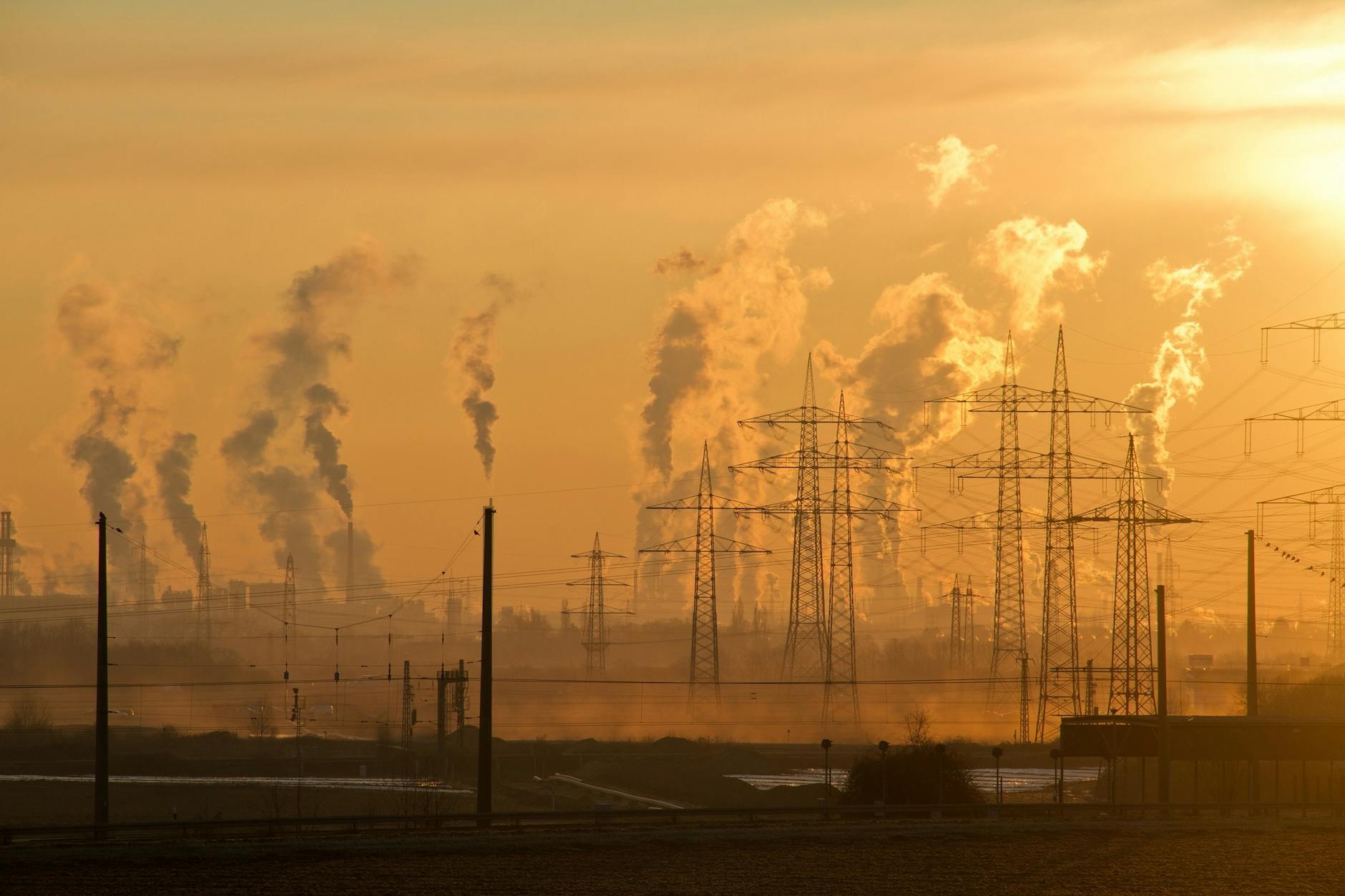
With concerns about the sustainability of fossil fuels increasing, the future of energy in the built environment seems to be electric. What does this decarbonization focus mean for sustainable design?
LEED v5 points the way towards a decarbonized future by raising the bar for projects seeking the highest level of LEED certification, LEED Platinum. To achieve LEED Platinum, projects must achieve four otherwise optional decarbonization-related credits:
- EAc1: Electrification (NC/CS) requires the project to eliminate on-site combustion to achieve maximum points.
- EAc3: Enhanced Energy Efficiency (NC/CS) requires projects to achieve 8 points (New Construction) or 5 points (Core and Shell), requiring a 24% energy reduction from baseline.
- EAc4: Renewable Energy (NC/CS) requires that 100% of site energy comes from renewable energy sources, either on- or off-site.
- MRc2: Reduce Embodied Carbon (NC/CS) requires a 20% reduction in the project’s embodied carbon from a “business as usual” baseline.
These challenging new platinum requirements are such a distinctive part of the new system that they are worth covering in their own four-part miniseries, starting with this post on EAc1: Electrification.
Each post in this series will analyze the credit’s intent, key requirements, relationship to LEED v5’s impact areas, credit options and key requirements, design strategies, synergies with other LEED credits, and global importance.
I hope that, through this miniseries, you will come to understand the importance of decarbonization in LEED v5 and strategies that designers may employ to reduce carbon emissions and create more sustainable buildings.
Credit Overview
EAc1: Electrification is a completely new credit in LEED v5. The credit’s intent is to reduce or eliminate on-site fuel combustion to support better air quality and to lower carbon emissions as the power grid moves away from carbon-producing fuels.
LEED v5’s credits and prerequisites are built on three impact areas: decarbonization, quality of life, and environmental conservation and restoration. EAc1: Electrification supports the decarbonization impact area through discouraging the use of carbon-producing fuels on-site.
Electrification provides 1-5 points (New Construction) or 1-4 points (Core and Shell). The average points available for a credit is about three points, so this credit is above average in value, reflecting its importance in the new system.
Credit Details
(For more details, you can find a PDF guide to LEED v5 for Building Design and Construction on USGBC’s website.)
The Electrification credit applies to both New Construction and Core and Shell projects, but requirements for each adaption differ somewhat. New Construction projects offer project teams two options for compliance:
- Option 1: No On-Site Combustion (5 pts):
- No on-site combustion except for emergency support systems.
- The combined weighted average equipment efficiency for space heating and service water heating must be rated at least 1.8 coefficient of performance (COP).
- Option 2: No On-Site Combustion Except at Low Temperatures (1-4 pts)
- Projects can follow any of several paths which may add up to 4 points. Options target greater efficiency and minimal combustion in space heating (Path 1), service water heating (Path 2) or cooking, laundry and process loads (Path 3).
Core and Shell projects, in which many of the project’s heating systems will be installed by tenants or according to tenant requirements, offer a similar but different set of options to New Construction projects in which the project team has greater control over installed systems:
- Option 1: Electrification (2-4 pts):
- Path 1: No On-Site Combustion (3-4 pts):
- Broadly like Option 1: No On-Site Combustion for New Construction, with a 1.8 COP required for 4 points and a 1.3 COP allowed for 3 points.
- Path 2: No On-Site Combustion Except at Low Temperatures (1-3 pts):
- Pursue efficiencies in space heating and service water heating equipment and operate without on-site combustion except below 20° F (-6.5° C).
- Path 3: No On-Site Combustion – Limited Scope (1-2 pts):
- Pursue efficiencies in space heating and service water heating equipment in a limited portion of the project and avoid on-site combustion except for emergency support systems.
- Path 1: No On-Site Combustion (3-4 pts):
- Option 2: Electrification Readiness (1 pt):
- Install building infrastructure (such as space for outdoor heat pumps) allowing the building to operate without on-site combustion and to install highly efficient heating systems in future.
- Tenant guidelines must include guidance for designing and installing efficient systems.
Design Strategies
Broadly speaking, EAc1: Electrification favors space heating and service water heating systems with the following characteristics:
- No combustion except for emergency support systems. (Combustion is allowable for very cold temperatures, but for reduced points and without the possibility of achieving LEED Platinum.)
- Efficient heating systems with a COP of 1.8 or above.
Conventional space heating and service water heating systems that burn fossil fuels (oil, natural gas or propane), which are quite common in existing buildings, are entirely disallowed by these requirements, except as emergency backup systems.
However, these requirements still leave designers with many options for electrification:
- Electric resistance heaters:
- Generate heat by running an electric current through a resistor.
- Compact, inexpensive, easy to install and readily available.
- Can allow for a high degree of thermostatic control in each space.
- 100% efficient (all electricity is converted into heat, COP = 1) – but only if both the inefficiency of electricity generation and transmission losses are ignored. Real efficiency is about 30% (COP = .3).
- Use high quality energy to do a simple job that can be performed by other energy sources more efficiently.
- Heat pumps are preferable in most climates, except in warm or mild climates with few heating days.
- Electric resistance is suitable for both space heating and service water heating.
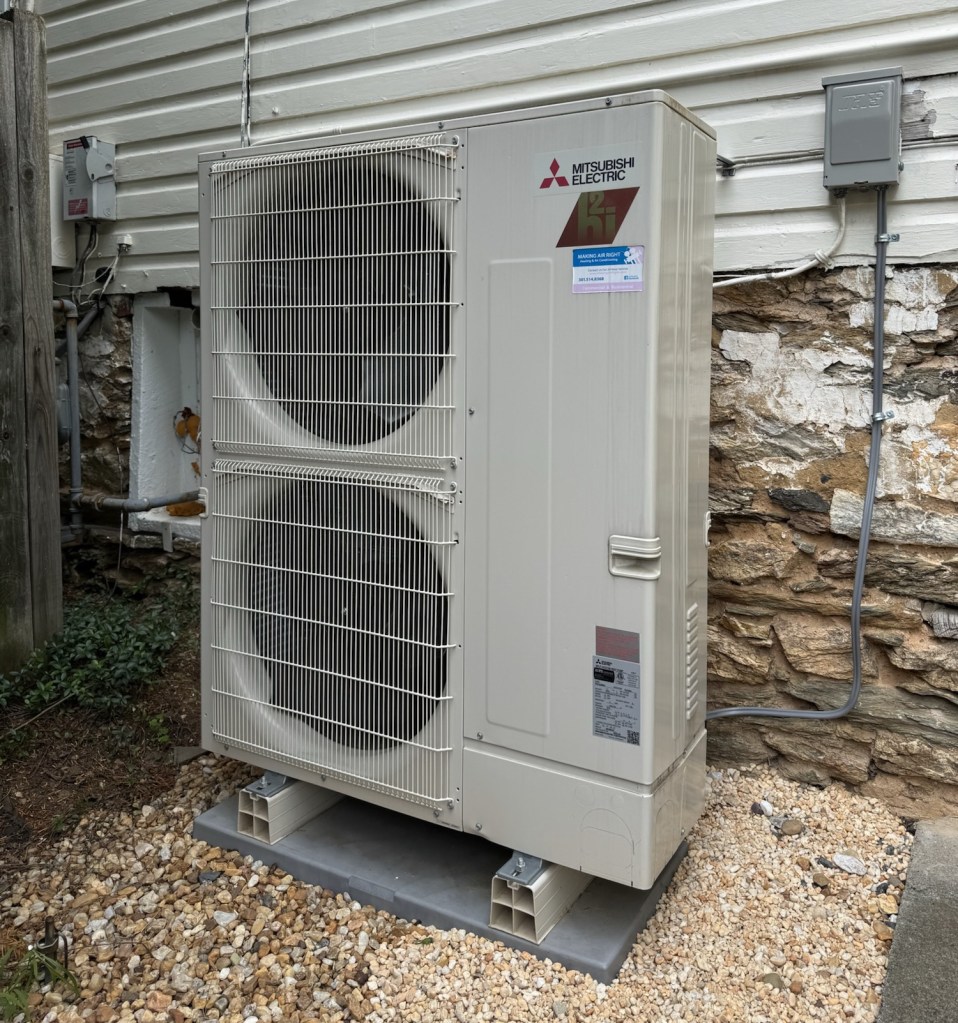
- Heat pumps:
- Use the expansion-compression refrigeration cycle to “pump” heat from the cold exterior of a building to the warm interior.
- Essentially an air conditioner run in reverse – many heat pump systems double as air conditioners in the summer.
- Use electrical energy only to “pump” heat, rather than to generate it, making heat pumps much more efficient than electric resistance heaters. Deliver more energy than they consume with COP > 1 (often much higher).
- Efficiency decreases rapidly as the outdoor temperature approaches freezing, leading to a reliance on electric resistance in cold temperatures (cold weather heap pumps are available, and ground source heat pumps work more efficiently in cold weather).
- Heat pumps can draw their heat from outdoor air, water (surface water like lakes and rivers; groundwater or aquifers; solar collectors that use solar energy to heat water), or the ground (ground-source or “geothermal” heat pumps).
- Water-source or ground-source heat pumps perform more efficiently in cold weather since water and earth are efficient heat sinks that can store large amounts of heat energy compared to the air. However, they are more expensive to install.
- Heat pumps are suitable for space heating and service water heating.
- Solar hot water heating:
- Collects heat energy from the sun in solar collectors (glass tube arrays, usually mounted on the building roof).
- Passive systems rely on gravity to move water, use no electricity; active systems use a pump.
- Direct solar collectors use sun-heated water as hot water; indirect collectors heat service water through a heat exchanger.
- Requires space on the building exterior or elsewhere on site. May have aesthetic consequences.
- Relies on sunlight being available, less efficient in the winter when it is most necessary.
- Solar hot water heating is suitable for service water heating and may be used in conjunction with a heat pump for space heating.
- Passive solar heating:
- Uses the sun’s energy to heat a space.
- May use no electricity, relying solely on convection to move heated air around the building, or may use forced air or pumped water to distribute heat.
- Direct gain spaces use direct sunlight to provide heat, such as through a large window or skylight, which can then heat surrounding spaces by convection.
- Indirect gain spaces use a direct gain space to heat a thermal mass (a massive wall or floor), which then heats the space beyond it. Trombe walls are a variant of indirect gain spaces.
- Sunrooms are greenhouse-like spaces with a semi-outdoor character which are heated by the sun and then heat other spaces.
- These systems are integral to building architecture and define the building’s character.
- Suitable for space heating.
While EAc1: Electrification focuses on heating systems rather than on energy efficiency, it is important to pair efficient systems with an energy efficient building envelope that will maintain a stable indoor temperature without overworking the heating system. Projects should make sure that the building envelope is well insulated (to reduce conduction) and air-tight (to reduce convection). In cold climates, radiative heat gain may be encouraged by using glazed areas with a high solar heat gain coefficient (SHGC) and dark colored materials which will absorb solar energy. High thermal mass may also help to regulate indoor temperature.
Heat generated inside the building, whether by heating systems or by people, lighting, computers or other equipment should not be lost through ventilation. Energy recovery ventilators use heat exchangers to recover heat from exhaust air leaving the building and use it to precondition cold air coming in from the outside, reducing the work done by the building’s heating system.
Projects can also store heat energy using a thermal energy storage (TES) system, accumulating energy when it is readily available (such as on a sunny day), and using stored energy when energy sources are not available (at night). Heat energy can be dumped into a heat sink, such as a water tank or molten salts or metals, or underground. Heat can be stored for hours, days, or even from summer to winter (in very large systems).
Overall, EAc1: Electrification encourages building designers and their clients to consider highly efficient and innovative systems which help ready buildings for an all-electric future.
Synergies with Other Credits
LEED is an interwoven system of mutually supporting credits, and sustainable design relies on synergies between different approaches and systems to produce the best results. Compliance with EAc1: Electrification supports compliance with the following credits and prerequisites, creating useful synergies:
- IPc2 Green Leases (CS):
- Reduction or elimination of on-site combustion helps to comply with the best practice of limiting on-site combustion.
- EAp1: Operational Carbon Projection and Decarbonization Plan (NC/CS):
- Supports Path 1 of the required decarbonization plan, which requires earning 4-5 points for EAc1: Electrification
- EAp2 Minimum Energy Efficiency and EAc3: Enhanced Energy Efficiency (NC/CS):
- The use of more efficient heat pumps as a space heating and service water heating source will reduce energy consumption and make compliance easier.
- EQp2: Fundamental Air Quality and EQc1 Enhanced Air Quality (NC/CS):
- Elimination of on-site combustion eliminates a source of carbon monoxide.
Conclusion
Electrification, whether through installing all-electric heating, minimizing combustion, or readying a building for electrification in future, plays a key role in decarbonizing the built environment, reducing the contribution buildings make to global warming through greenhouse gas emissions.
Eliminating combustion in buildings or on-site also eliminates a source of air pollution and reduced air quality for building users, resulting in better human and environmental health. It increases user safety by eliminating the source of carbon monoxide and a possible source of fires and explosions.
Many electric heating systems, such as heat pumps, are more efficient than their fossil fuel counterparts, and offer building owners cost savings by increasing energy efficiency, as well as reducing pressure on the grid.
Electrification makes a building ready for a future in which we rely on electricity for building heating, electricity which is now mainly generated using fossil fuels, but may in future be generated using any number of renewable sources.
Thanks for reading! Please like this post if you enjoyed the content, comment if you have any questions, and consider subscribing to this blog for future posts.

 Green Synergies
Leave a reply to Building a Clean Energy Future: LEED v5’s Renewable Energy Credit – Green Synergies Cancel reply